
Core Philosophy Statement
True cybersecurity compliance isn't a set of documents — it's a disciplined, living system.
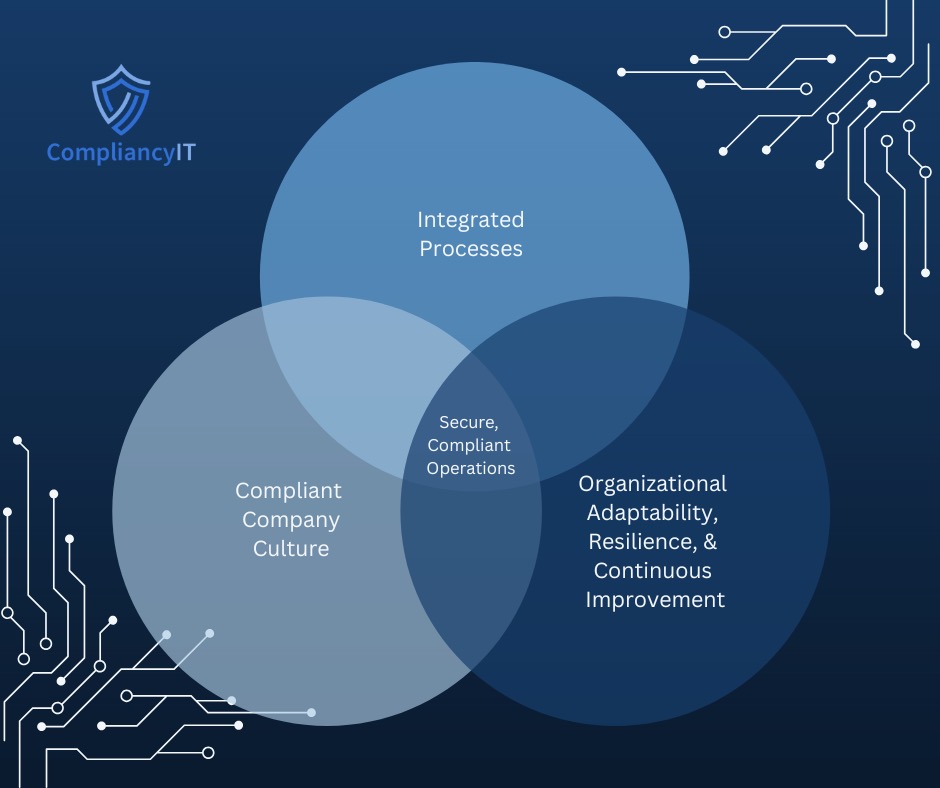
The Disciplined Resiliency Model transforms compliance from a checklist into a culture, embedding security and governance into every operational thread.
It ensures that your business isn't just compliant today — it's provably, continuously compliant and resilient tomorrow.
In order to measure current security and compliance position, we establish and track Key Security Indicators. These metrics give us confidence that we are compliant and secure over time without needing to continuously measure specific controls.
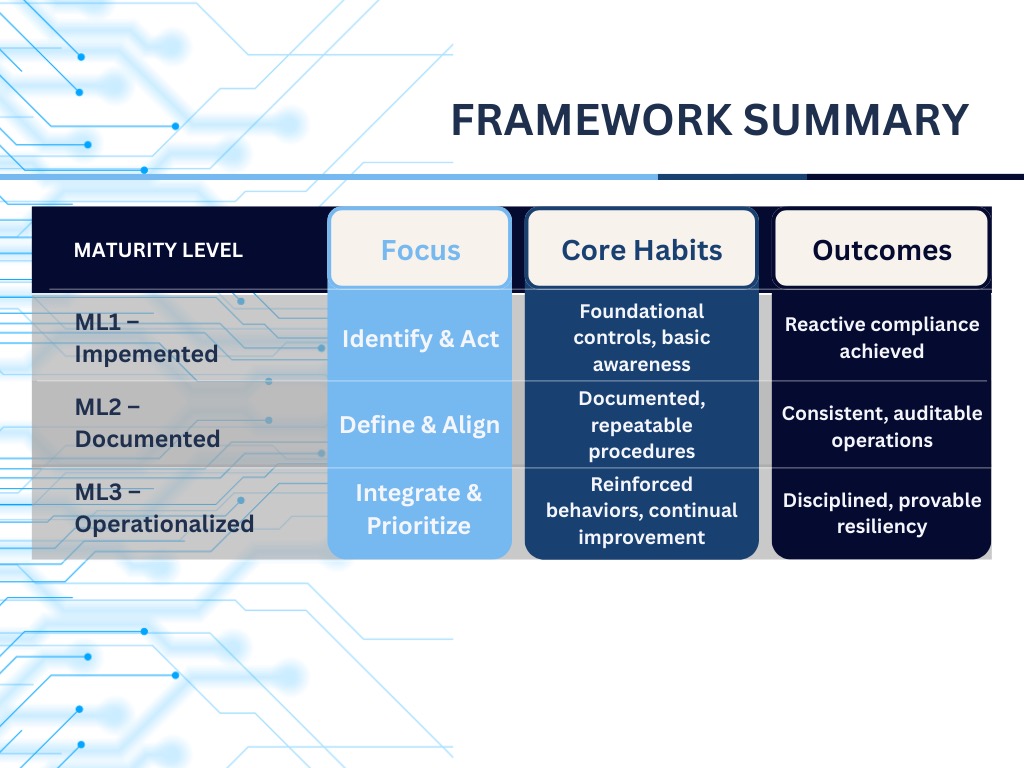
The 3 Levels of Compliance Maturity
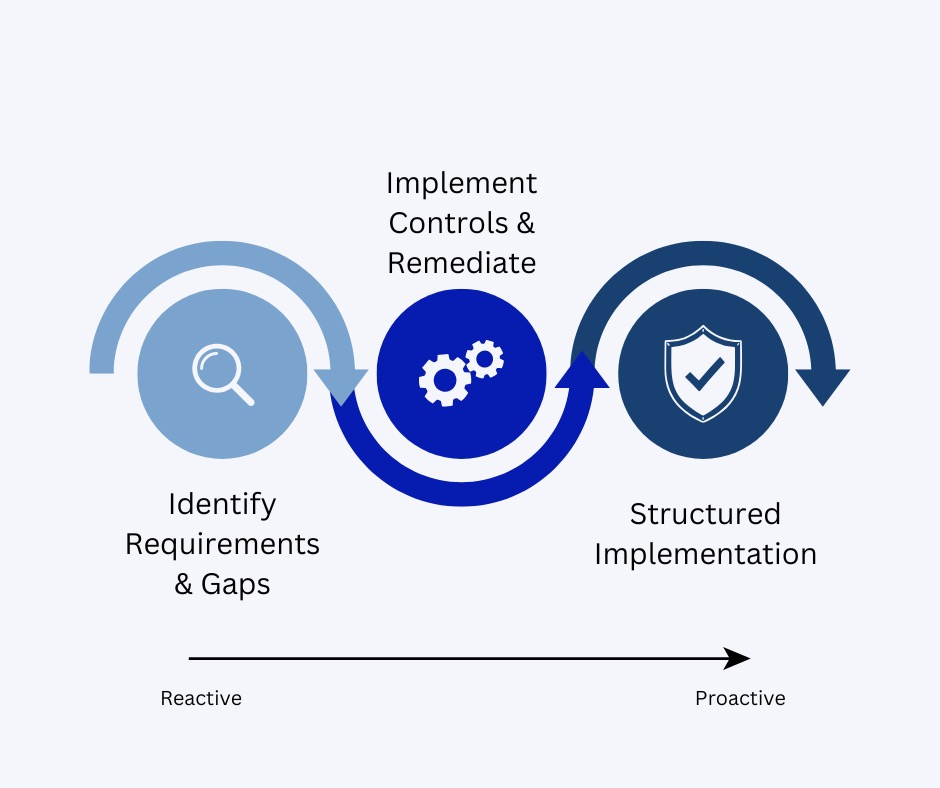
Maturity Level 1 — Implemented
(Identify & Act)
Focus: Getting controls in place.
Description:
At this level, organizations identify what's required and implement basic technical and procedural controls. The focus is on getting to a functional baseline of compliance — closing obvious gaps, responding to audit requirements, and building foundational security habits.
Goal: Move from reactive compliance to structured implementation.
Mindset: "We know what to do and we've started doing it."
Keywords: Identify • Implement • Reactive → Proactive
Timeline to achieve: 8 – 12 months
Maturity Level 2 — Documented
(Define & Align)
Focus: Standardization and accountability.
Description:
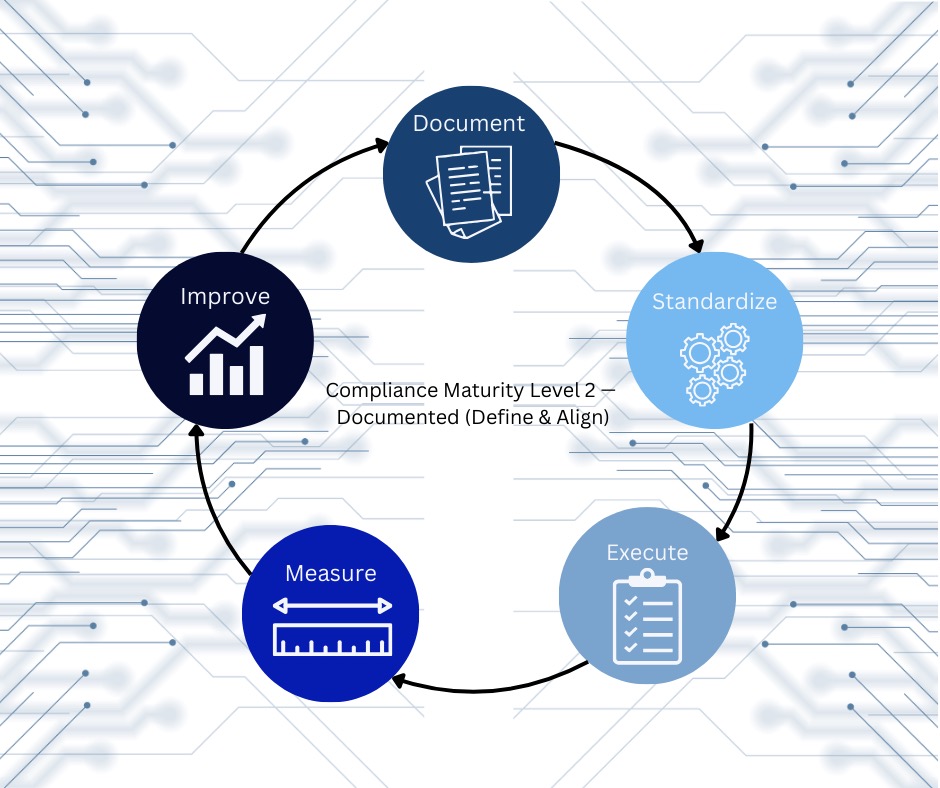
Controls are now defined, documented, and repeatable. The organization has policies, procedures, and artifacts that demonstrate compliance to external assessors (CMMC, NIST, ISO, etc.). Compliance becomes systematic rather than situational.
Goal: Build consistency, traceability, and evidence.
Mindset: "We can prove what we do, every time."
Keywords: Document • Standardize • Repeatable • Measurable
Timeline to achieve: 12 – 18 months
Maturity Level 3 — Operationalized
(Integrate & Prioritize)
Focus: Integration and cultural adoption.
Description:
Compliance is now baked into business operations. Cybersecurity and compliance are cultural norms, reflected in every department's habits, decisions, and communications. The organization maintains a continual process of monitoring, review, and improvement — not because it's mandated, but because it's who they are.
Goal: Achieve disciplined resiliency — provable, sustainable, and adaptive compliance.
Mindset: "Compliance and security are just how we operate."
Keywords: Integrate • Reinforce • Adapt • Resilient • Continuous Improvement
Timeline to achieve: 18 – 24+ months
The Continuous Thread: From Compliance to Resiliency
CMMC demands provable, continued compliance — this means the old "binders on the shelf" approach fails. To sustain compliance:
- Processes must evolve into disciplined, auditable habits.
- Culture must reinforce security as a shared responsibility.
- Budgets must align with the reality that resiliency is a cost of doing business.
When compliance is woven into operations:
- You're not reacting to new frameworks — you're already aligned.
- You adapt faster to emerging threats and regulatory shifts.
- You gain operational confidence — no more wondering if you're compliant; you know you are.
- How do you know where you fall in the ML levels right now? Where the organization currently falls, will impact the timeline to achieve CMMC compliance. For instance, an organization who is (CMMI already in place, operationally mature, will know how to naturally integrate this more than an org that is not operationally mature).